
What Healthy Development Really Looks Like
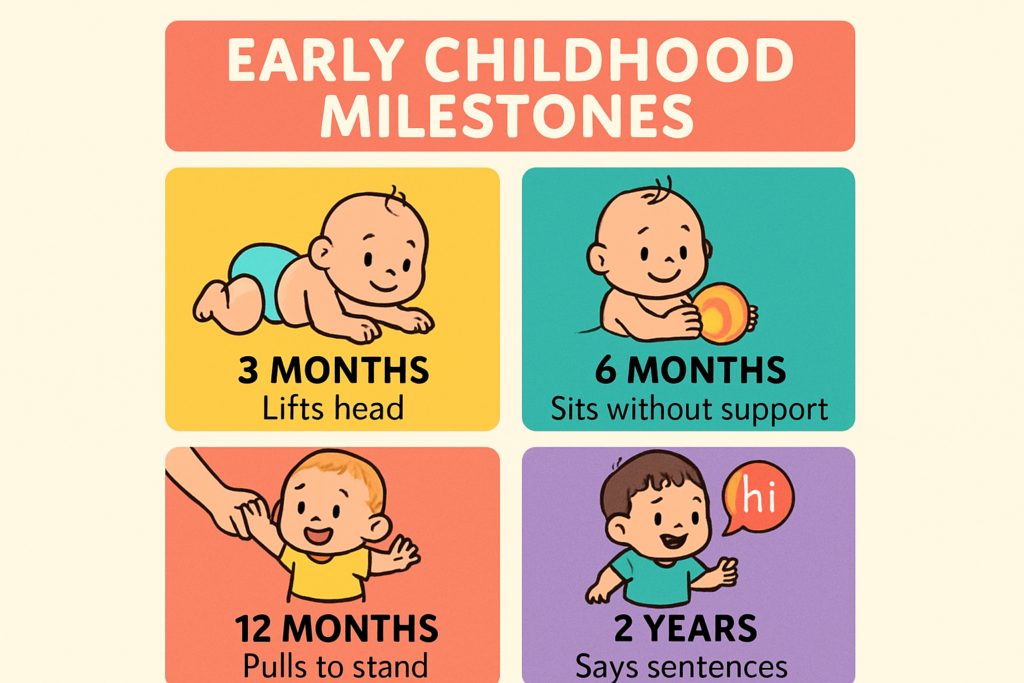
Milestones are more than checkboxes. They help us notice the steady climb kids make as they grow. Physically, it’s mastering things like rolling over, sitting up, walking. Cognitively, it’s recognizing people, solving simple problems, or using language. Emotional milestones show up in things like bonding with caregivers or navigating frustration. Socially, it means learning to play, share, or just feel comfortable around others. These aren’t fixed timelines they’re signposts.
That’s why the phrase “every child grows at their own pace” holds real weight. Some babies walk late but talk early. Others speak slowly but show strong emotional intelligence. Typical development includes a wide range of normal. Atypical doesn’t automatically mean something is wrong it means advice, support, maybe a closer look. Stressing about being behind by a month or two often leads nowhere useful.
Early observations matter. They’re not about labeling. They’re about tracking trends what’s consistent, what’s shifting, where help might be needed. When we notice a pattern early on, we can ease struggles down the road. If we miss it, we might be playing catch up later. Healthy development is less about exact timing and more about steady movement forward.
Ages 0 1: The Foundation Year
The first year is packed with more change than any other stage. Babies go from curled up observers to upright explorers, and every tiny shift counts. Milestones to keep an eye on include eye contact (often starting around 6 8 weeks), steady head control (by 3 4 months), rolling over (4 6 months), and those first intentional sounds or words (usually by the end of the first year). These aren’t hard deadlines, but useful signs that development is on track.
A lot of what’s happening in this phase isn’t visible on the surface. Sensory development how babies process light, sound, touch, and motion is in high gear. You’ll notice preferences (a favorite song calms them) and reactions to overstimulation (crying during chaotic moments). Equally crucial is attachment. That bond forms through repetition and comfort: feeding, cuddling, eye to eye moments. When babies feel safe, they try new things.
It’s worth trusting your gut, too. If a baby isn’t making eye contact by two months, doesn’t start to babble or gesture later in the year, or seems unusually stiff or floppy in their movements, it may be time for a professional opinion. Not to panic just to rule things out early, when support is most effective. The key: don’t watch milestones with panic, but with attention.
Ages 1 3: Language, Mobility & Emotional Awareness
This stage is loud, messy, and full of forward leaps. Toddlers between 1 and 3 start to move with purpose walking turns from wobble to certainty. Words begin to string together. You’ll hear “I do it” a lot, and yes, they mean it. This is when independence kicks in.
Alongside the milestones come the meltdowns. Tantrums are common and developmentally normal. Emotional outbursts aren’t signs of misbehavior they’re signs that a child’s brain is still figuring out how to process big feelings without the right words or tools. These moments aren’t failures. They’re practice.
The best way caregivers can support toddlers through this intense growth window? Keep routines steady and boundaries clear. Narrate what’s happening, respond with calm, and guide them toward language, not just behavior correction. Social growth happens in tiny moments: taking turns with toys, pointing to show interest, or saying sorry (even if prompted).
If you’re looking for a solid go to list, check out these recommended child development books that cover the science and the sanity saving basics of parenting through the toddler years.
Ages 4 5: Preparing for Structure and School

Children between ages 4 and 5 experience noticeable shifts in behavior, communication, and emotional development. This stage is often marked by a growing interest in learning, forming friendships, and responding to structure signs that they may be ready for school environments.
Key Indicators of School Readiness
While every child progresses differently, there are several core skills that indicate readiness for structured learning environments:
Improved Attention Span: Children start focusing on tasks for longer periods 10 to 15 minutes is a strong sign at this stage.
Following Instructions: They can listen, process, and respond to two step directions (e.g., “Put your shoes on and grab your backpack”).
Emotional Self Regulation: Increasing ability to manage frustrations, use words instead of meltdowns, and recover after disappointment.
Sharpening Fine Motor & Communication Skills
Development continues rapidly in both physical coordination and expressive language:
Fine Motor Skills:
Holding crayons or pencils with better control
Using scissors with guidance
Completing simple puzzles or manipulatives that require grip and intent
Communication Skills:
Telling short stories or explaining events clearly
Asking and answering questions with more thought
Recognizing and naming emotions in themselves and others
Social Growth Through Peer Play
This is a dynamic period for social interaction. At these ages, children begin:
Forming genuine friendships, not just parallel play
Practicing empathy, such as offering comfort or sharing toys
Understanding the rules of play, including turn taking and cooperation
Behavioral Cues Worth a Closer Look
Sometimes, the indicators of school readiness are subtle or emerge unevenly. Parents and caregivers should stay aware of behavioral patterns that may need support, such as:
Persistent difficulty separating from parents, beyond initial discomfort
Avoiding group activities or prolonged disinterest in social play
Ongoing struggles with speech clarity beyond typical language delays
If concerns persist, early discussions with educators or pediatric specialists can offer guidance on developmental support or further evaluation.
Preparing for school isn’t about being perfect it’s about recognizing the signs of readiness while offering a nurturing environment that supports continued growth.
How to Track Growth Without Over Tracking
For parents trying to stay on top of early childhood development, tools like growth charts and milestone checklist apps can be helpful if used with the right mindset. These tools aren’t report cards; they’re reference points. Use them to spot patterns, not problems. Not every child hits milestones like clockwork, and chasing every checkbox can lead to more stress than clarity.
Journaling simple daily behaviors can give you a real world view of progress. Did your child stack blocks today? Try a new word? Handle frustration a little better than last week? These micro moments often offer more insight than one size fits all metrics. But if your instinct keeps nudging you if delays consistently appear, or your gut says something’s off it’s worth listening.
That’s where professional assessments come in. They’re not admissions of failure, just tools for understanding. Pediatricians, child development specialists, and early intervention programs exist to identify real needs and they often catch nuances a checklist can’t. Bottom line: track progress, but don’t lose the plot. The goal isn’t perfection. It’s connection, observation, and stepping in when it matters most.
Resources That Actually Help
Sorting through parenting advice can feel like trying to sip from a firehose. The key is leaning on tools and communities that are grounded, accurate, and supportive without making you spiral. Reliable parenting forums particularly those moderated by professionals or tied to trusted organizations give you a space to sense check what you’re experiencing, swap advice, or just feel less alone in the chaos of raising a tiny human.
For keeping track of development, there are now apps and trackers that go beyond generic checklists. Look for ones created with input from child psychologists or pediatricians they tend to flag the right milestones and help you spot patterns without inducing panic. And if you’re the pen and paper type, journaling your child’s behaviors can be just as effective.
Between the daily noise, well curated child development books offer clarity. They’re written by experts who’ve already translated the research into real life insights. Find one (or a few) that fit your child’s age range and your values.
Lastly, don’t underestimate the power of collaboration. Pediatricians and educators bring outside perspective especially helpful when something feels off or just confusing. It’s not about handing over control. It’s about building a full, informed view of your child’s development with people who see kids across the spectrum. When parents team up with pros, support becomes a system not just a safety net.
Staying Grounded as a Parent
It’s easy to slip into comparison mode especially when every scroll online shows a toddler reading chapter books or doing karate kicks. But kids aren’t blueprints. They don’t hit milestones at the same speed, and that’s not just okay it’s normal. Letting go of the mental scoreboard is one of the quickest ways to breathe easier as a parent.
Instead of asking, “Why isn’t my child doing that yet?” try asking, “What’s going on in their world right now?” Small things like how they stack blocks or how they mimic a laugh can say a lot. Observation without judgment lets you meet your child where they are, not where the charts (or other parents) say they should be.
Progress isn’t always loud. Sometimes it’s a calmer bedtime. Or a new word whispered under their breath. These are wins. When we notice the quiet steps, we teach kids and ourselves that growth doesn’t need to shout to matter.











































































































































































































































































































































































































































































































































































































































































































































































































































































































































































































































































































































































































































































































































































































































































































































































































































































































































































































































































































































































































































































 Founder & Chief Editor