Why It’s Worth Making Time
Shared time isn’t a luxury. It’s the glue. In a world full of screens and distractions, just being together fully present can feel rare. But that’s exactly what makes it powerful. Families that carve out intentional time together build deeper, more durable bonds. It doesn’t take elaborate plans or expensive trips. It just takes showing up.
Turning off devices, even for a few hours, changes the dynamic. Conversations stretch longer. Jokes land better. Small moments that might get missed start to matter like a kid proudly holding up a lopsided pancake or a parent’s clumsy attempt at a dance move.
When activities have a purpose creating, building, exploring together they naturally draw people closer. Participation becomes engagement. Engagement becomes connection. These aren’t just one off memories; they’re emotional scaffolding families can return to again and again. It’s not about perfection. It’s about presence.
Activity Ideas That Actually Work

Looking for screen free, family friendly ideas that everyone can actually enjoy? These activities are designed to spark connection, creativity, and collaboration without the stress.
DIY Projects That Spark Teamwork
Hands on creativity can bring everyone together while building communication and cooperation skills.
Try these collaborative activities:
Family vision boards: Use magazines, markers, and poster boards to design a shared “vision” for the year. Everyone contributes their dreams and goals.
Group mural painting: One large canvas, lots of brushes take turns adding colors, words, and shapes.
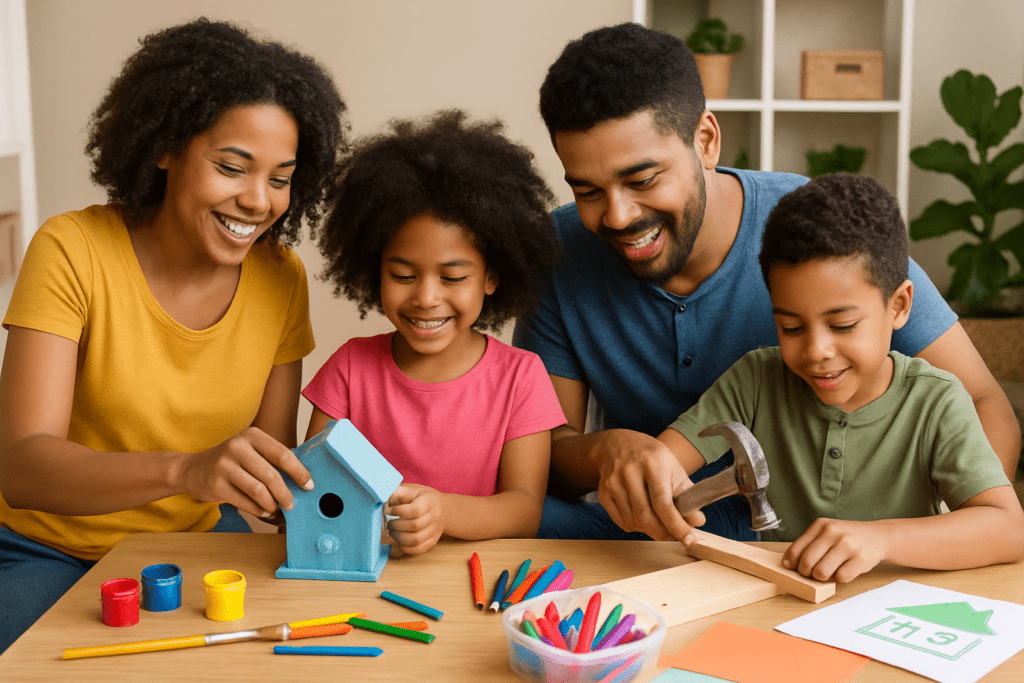
Build it kits: Choose a weekend project like a birdhouse, a backyard planter, or even cardboard model cities. Everyone can contribute to the design and assembly.
What kids learn along the way:
Patience, planning, and problem solving skills
How to contribute to a shared goal
Confidence in making creative decisions
Cook Something Together
The kitchen is more than a place to prepare food it’s where stories, laughs, and teamwork come naturally.
Ideas to get started:
Rotating cooking nights: Let each person pick a dish and take the lead (with age appropriate help). It builds responsibility and ownership.
Themed meals: Turn dinner into an event with themes like Italian Night, Breakfast for Dinner, or Taco Sunday.
Learning moments: Measuring, mixing, and timing offer casual entry points for math, science, and life skills.
Bonus tip: Let go of perfection focus on the process, not the outcome.
Nature Based Adventures
Outdoor time offers the perfect mix of exploration, learning, and shared experiences right in your backyard or nearby park.
Outdoor activities to try:
Backyard camping: Pitch a tent, roast marshmallows, share ghost stories, and stargaze all without leaving home.
Local hiking + scavenger hunts: Create a nature themed checklist for things to spot along your route leaves, bugs, colors, or sounds.
Growing a family garden: Assign each family member a plant to grow and tend. Watch everyone’s little patch thrive over time.
What this builds:
Patience, responsibility, and respect for nature
Family traditions grounded in shared experiences
Game Night That Doesn’t Get Boring
Breathe new life into this classic tradition by switching up how you play and what you play.
Refresh your routine with:
Creative board games: Try cooperative games, storytelling prompts, or trivia twists.
DIY game challenges: Let kids invent their own game or remix an old favorite.
Rotating game master: Each weekend, a different family member chooses the featured game of the week.
Mini chats between rounds: Use downtime to pause, reflect, and connect with simple questions: “What was the best part of your week?” or “What made you laugh today?”
Want more on the value of play? Learn about the benefits of play.
Making It a Habit Without Forcing It
Consistency brings people closer but too much structure can backfire. Instead of scheduling every hour, look for natural windows in the week. Maybe it’s one weekend morning, or a laid back Friday night. Keep it simple: the goal isn’t to fill a calendar, it’s to show up.
Let the kids take the lead sometimes. One spontaneous idea from them can outshine any parent planned project. Whether it’s building a fort, performing a goofy skit, or inventing a new game, their creativity often brings the most fun into the mix.
More than anything, avoid turning it into a checklist. These moments should feel easy, not forced. A good rhythm is more important than perfection. Keep showing up in small ways, and the connection builds on its own.
The Long Term Payoff
The best part about doing things together on weekends? It’s not just fun in the moment. Families that play, build, and explore together start to speak the same language across generations. Conversations flow better when they’ve been warmed up by shared experiences, even something as simple as painting a mural or grilling tacos together.
Problem solving gets sharper as a group. When families collaborate on a scavenger hunt, in the kitchen, or during a strategy heavy game night they learn how to navigate decisions as a unit. Kids pick up patience and negotiation. Adults rediscover flexibility. Everyone benefits from the practice.
And then there’s the resilience factor. Memories built through small, regular moments give families something to lean on during hard times. That inside joke from a rainy camping trip or the tradition of Saturday pancake flipping these create emotional anchors, especially for kids.
Want to go deeper? (Explore the lasting benefits of play for families and growing minds).







































































































































































































































































































































































































































































































































































































































































































































































































































































































































































































































































































































































































































































































































































































































































































































































































































































































































































































































































































































































































































































 Senior Parenting Writer